No License Plate, No Problem!

Fox 4 News had an interesting story on the front license plate law.  The law has always been that you have to have a front and back license plate on your car.  Other states, however, only require a back plate.

Some people don't know about this law, or purposely defy it because they don't want to drill holes in their front bumper.

Time and time again, I have seen local police use this as an excuse to pull people over to see if they have been drinking.  Its one of the may little traffic laws that law enforcement use as a pretext to stop a car when they are only looking for drunk drivers.

Well, based on some mishaps in Austin, it looks they missed this one.  Below is the story:

--

Texas Lawmakers Accidentally Omit 2 License Plate Law

DALLAS - Vehicles in Texas must display both front and back license plates. It’s been a state law since 1934. But lawmakers in rewriting the state transportation code recently made what could be a serious omission.

“Absolutely it is a potentially very big problem,” said Robert Gregg, a criminal defense and personal injury attorney. “The issue is not whether it is a fine. That’s where we start. The issue is whether or not it’s a crime.”

The old law read, “A person commits an offense if the person operates… a passenger car or commercial motor vehicle that does not display two license plates at the front and rear of the vehicle.”

In the new bill passed into law on the last day of the session that language was accidentally struck from the measure.

“Problem is they didn’t move it over to the new section, therefore it’s not a crime,” Gregg said.

And if the offense is no crime, law enforcement officials may no longer be able to pull people over for it.

“It is fairly common. Unfortunately in this state people don’t really adhere to the two plate rule like they should. They put a lot of their school logos or their favorite football or baseball team and it is against the law. It is a crime,” said Sgt. Don Pertiz with the Dallas County Sheriff's Department.

Pertiz said the law is often used as a tool to stop criminals on the streets.

“You’d be surprised how many offenses we uncover that start with no front license plate,” he said.

Trying to rectify the wrong, El Paso lawmaker Joe Pickett, who wrote the bill, has asked the attorney general for an opinion on whether it is a Class C misdemeanor not to display two license plates on a motor vehicle.

“Most times they don’t give you a ticket for this so the issue of not having a fine is not really it. The issue is they’ve taken out that it’s an offense. It’s not an offense. They can’t use it to pull somebody over, which they use it every day all day long,” Gregg said.

Pertiz said officers will likely continue to issue tickets based on the original law and let the courts worry about it.

Tags:

DWI with BAC over .15

Well, there's a new law in town, and the local police and District Attorneys are already pushing it hard. Its a DWI with a breath or blood alcohol level of .15 or more.

The amended text of Penal Code 49.04 reads:

(d) If it is shown on the trial of an offense under this section that an analysis of a specimen of the person's blood, breath, or urine showed an alcohol concentration level of 0/15 or more at the time the analysis was performed, the offense is a Class A misdemeanor.

So now if you were facing a regular DWI the punishment range was 72 hrs in jail - 180 days in jail, or a term of probation not to exceed 2 years.  The new DWI +.15 punishment range is 0 days in jail - 1 year in jail, and a term of probation not to exceed 2 years.

MADD pushed hard for this, and our legislators folded as usual.  But here's the funny part....

This new crime will decrease the amount of convictions, and decrease the punishment for offenders!

What???

Here's why -- first of all, no first time offenders go to jail on a DWI 1st.  Therefore, since the length of probation is the same, the underlying jail sentence doesn't change anything.  If someone were to go to jail on a DWI 1st, it most certainly wouldn't be for a length over 6 months anyway.  

Decrease In Punishment Step ONE

Less people would be inclined to provide a breath or blood test. This is the same effect that the surcharges have had on poeple arrested for DWI.  If you do not give a breath or blood test, you cannot be charged with this "higher" level crime -- so why do it?  Refuse, Refuse, Refuse ! !

Decrease in Punishment, Step TWO

This actually LOWERS the minimum sentence for DWI.  Before, the minimum was 72 hrs in jail up to 180 days.  With this new law, the range is 0 days in jail, up to 1 year in jail.  Therefore, a prosecutor can give a $1 fine, and 0 days in jail. 

So there you go.  The new "tougher" crime effectively lowers the punishment range and decreases the chances of a conviction for the state.  Congratulations MADD.  You win again.

Substance Abuse Evaluations in a DWI Probation

Recently, I was in contact with Michael Salas, a licensed counselor.  He had read my article, Substance Abuse Evaluations (SASSI) in DWI cases, which is one of the highest read pages from my blog.

He wrote an article about the other side of substance abuse evaluations -- they way they should be done.  Objective Substance Abuse Evaluations is the title and I've included the text below:

________________________________________________________________

Objective Substance Abuse Evaluations

I recently read something on a local attorney’s blog that was disturbing to me. This was that some counselors who were evaluating clients were making recommendations based on one screening instrument alone. Thus, I thought it was important for me to write about completing a comprehensive substance abuse interview, evaluation, and report. Making an objective assessment on a person you spend an hour or two with is a difficult task, and I do not pretend to get to know the whole person in that timeframe. Also, I take care not to diagnose something that I am not sure of, because like it or not, a diagnosis is a label. I understand the need in our current state of counseling to have labels, but it is a label nevertheless. I would not want a label that I did not think was attributed to me, and I would not expect that a client would want an inappropriate label either.

There are ways for you to be sure that you are having an objective substance abuse evaluation completed. For an objective assessment and evaluation to be completed, you should be completing a fair amount of paperwork prior to the evaluation. I tell clients to expect to spend about an hour completing preliminary paperwork for the evaluation, and then another hour interviewing with me after this. The evaluation should be comprehensive, in my opinion, and not only focusing on your alcohol or drug use history. Ask if the format that is used is comprehensive. Two well known formats for this interview process are the ASI for adults and CASI for adolescents. The reason that you want the assessment to be comprehensive is because you can then take greater comfort in that the counselor is likely trying to see the whole picture and is less likely to jump to conclusions based on your alcohol and drug use history alone.

It is also beneficial to ask if the interviewer is using a computer-based report writing system. Using a computer-based system should not disqualify or deter you from having your evaluation completed by that person, but it does cue you to ask a couple more questions. If they use a computer based system, do they edit the automatically generated report? I have used computer-generated reports, but they should only be used as a skeleton. Those reports alone are incomplete at best. I have yet to complete an evaluation that was generated by these report-writing systems that did not need some editing to accurately reflect the person and his/her situation. It is also beneficial to ask if there are any other sources of information that will be included in the report. For example, it is my policy to ask for at least two collateral contacts to put into the report, include several screening instruments into the report, and to include barriers to treatment recommendations for clients as needed.

Over time, I have found that some clients are worried that a counselor is simply recommending something so that they can get the business themselves. This is an understandable concern. This is when it is important to understand the rational behind the recommendations. For example, at the end of an evaluation, I will tell a client of a range of what I will recommend for treatment. I give this range, because I have found in the past that if I give a specific recommendation at that time, and then contact collateral contacts and obtain new information, and the recommendation changes, the client is confused, upset, or feels lied to. At this time, I explain rationale for decisions being made. If a client has been in treatment recently, then that same level of care is less likely to be recommended. If a client has participated in several groups, and is again having troubles, then individual treatment is maybe more appropriate. If there have been multiple failed attempts of having no problems in an outpatient setting, then residential treatment may be necessary. There are many situations and scenarios that can make up a recommendation on an evaluation. One widely recognized recommendation determination tool is using ASAM ratings. This helps a counselor determine, which client is appropriate for which setting. But even this is not an end-all solution to making an appropriate recommendation.

Finally, the best recommendation I can give you is be open and honest. Sometimes people are honest, but not necessarily open. For example, if you go to the doctor and your knee has really been bothering you, but you are not in a place where you are wanting surgery or to be unable to work, you might not tell the doctor all of the information in hopes that this will change the recommendation. The only problem is that you are more likely to get a higher level of care recommended if you are not open. It is much easier to write a recommendation for someone for the least restrictive setting if they are open in an interview.

As you can see by the above information, writing a recommendation for a client objectively is a difficult task. There are ways, though, to determine if a counselor is writing an objective report. By asking the counselor how comprehensive the report is, how they generate their reports, and how open they are with you about the recommendations, you will be able to take greater comfort in the fact that your evaluation is objectively written to best reflect your current situation and needs.


Tags:

Innocence Lost

It was a sad day in Collin County. Yet another innocent person was convicted of a crime based on circumstantial evidence and the testimony of an admitted felon and child molester. On Friday, Judge Suzanne Wooten was convicted of 9 counts of bribery, money laundering.  Judge Wooten allegedly took money in return for a promise to give favorable rulings.

I guess I shouldn’t be surprised. In a county and era notorious for overzealous prosecution, observers might already be hardened to the notion of innocent people being convicted of crimes. 

- Nationally there have been 280 DNA exonerations.

- In Texas, 41 innocent lives have been exonerated from wrongful convictions due to DNA testing.

- In Collin County, even the Supreme Court says its OK to have the Judge and the prosecutor in a sexual relationship together during the prosecution of a capital murder.

A Lack of Substantial Evidence

Part of why I was surprised of this conviction is because I thought there was no way a guilty verdict would ever come from this case. I sat through parts of the trial and never saw any evidence that even remotely pointed towards guilt. 

The theory of the case was an odd one to me. In a county where no incumbent judge had ever been defeated, supposedly someone was willing to “bribe” a lawyer to unseat a judge, and reverse rulings already made on their case. The theory was further removed from reality considering Judge Wooten removed herself from the case and never made any rulings that aided the briber.

The prosecutor’s theory (an Assistant Attorney General brought in “AG”) was quite close to the plot of John Grisham’s The Appeal, where a Mississippi Supreme Court justice is pushed to the court to hopefully overturn a big corporate jury verdict. In the book, however, the judge to be didn’t know of the reason he was being placed on the court.

But the fiction in this case became hard reality for Judge Wooten. She now faces up to 20 years in prison. Along with the possible prison sentence she is also subject to the convicted felony tag, the loss of her job as a judge, and probable loss of her law license.

The AG’s theory of the case is that it didn’t matter if the Judge made the favorable rulings or not – the bribe was committed on acceptance of the offer. I guess that is true in theory. I offer to pay an elected official for some favor, they are guilty when they take the money, not when they do the favor. 

But a closer look at that idea would show that if the bribed person didn’t do the favor in return for the bribe, then it most likely wasn’t a bribe anyway. The briber in Wooten’s case certainly got screwed out of their $150,000 considering the bribed judge refused to even hear the case much less make favorable rulings.

A Lack of Faith in the Prosecutors

When I was a prosecutor in Collin County, nobody ever asked me how many innocent people I thought I convicted. As a defense attorney, I am constantly asked how many guilty people I get off. The general public perceives the greater “wrong” to be a guilty person getting away with a crime, not an innocent person getting convicted.

“It is better that ten guilty persons escape than that one innocent suffer" ~William Blackstone, c.1760’s

Although not asked about convicting innocent people as a prosecutor, I thought about it during and after my prosecuting career ended.  The stock answer in my mind was that I never convicted anyone.   They either pled guilty, or a jury convicted them – never me.

My suspicion is that the AG in the Wooten case feels the same way. A jury convicted Wooten – not him.   Furthermore, the jury’s verdict justified this prosecution. 

Except this AG had even more to gain from a guilty verdict. This verdict cleared his name in an FBI investigation against him.   The problem with this outcome is that this prosecution could have been pushed forward out of a hope to clear his name – not for a prosecutor’s stated duty of seeing that justice be done.

Art. 2.01. It shall be the primary duty of all prosecuting attorneys, including any special prosecutors, not to convict, but to see that justice is done. 

At one point the current Collin County District Attorney tried to intervene and take the case back out of the hands of the AG. This was fought by the AG and eventually overruled by the visiting judge.

If a new, uninterested prosecutor were assigned to the case, the outcome might have become more reliable, and easier for me to believe.

Political Overtones

Much of the lack of faith in the conviction also comes from the political overtones in this case. An ousted republican incumbent judge, upset at a perceived Democratic challenger that smelled of “RINO.” (Republican In Name Only).   She was referred by the ousted judge as “active in the Democratic party.”

So here we have it, an AG working for the Republican elected AG’s office, prosecuting a perceived Democrat. If the undertones weren’t enough, during the trial the prosecution politics a focal point of their case. Questions were asked of how many Republic events Judge Wooten attended before running.  Not exactly subtle.

It had always been a joke that its illegal to be a Democrat in Collin County. Unfortunately this trial brings the joke into possible reality.

In The End . . .

In the end I am saddened by what seems on all accounts as yet another innocent person being convicted of a crime. If there was any chance at the public having faith in the jury’s verdict, it was lost a long time ago in the face of the overwhelming politics that plagued this case.

 Hunter Biederman is a DWI / Criminal Defense Attorney in Collin County. He publishes his blog (www.friscodwilawyer.com) which focuses on the Collin County and Texas legal system. He can be reached at friscolaw@gmail.com or (888) DWI-FRISCO.


Meet the Candidates for the 199th District Court, Collin County

With the upcoming retirement of District Judge Robert Dry in the 199th, candidates have begun their preparations for seeking the Collin County District Bench.  So far, I have received two mailers from attorneys seeking the bench.  As new candidates pop up, I will add them here once I receive solid information that are running. ("Solid Information" generally means a public website or candidate contacting me directly)


ANGELA TUCKER                        

Angela Tucker has practiced civil, family, and criminal law. After spending four years as an Assistant District Attorney in Collin County, she opened her law office and currently is a solo practitioner at Angela M. Tucker, PC.

Mrs. Tucker has stated in the past she is, "committed to representing the people of Collin County by serving as the next [Judge]. To maintain high legal standards, it is imperative that we elect judges who have a strong work ethic, high moral standards, and diverse experience.”

Mrs. Tucker lives in McKinney with her husband James and two children.

Mrs. Tucker's campaign website can be found at www.angelatuckerforjudge.com


SHARON RAMAGE 

Sharon Ramage has been licensed to practice law since 1992. As a former social worker, Ms. Ramage has practiced law in many areas specific to protecting children since that time. From 1992-1997, Sharon served as an Assistant Criminal District Attorney in Tarrant County, and was assigned to the Crimes Against Children Division from 1995-1997.

After resigning from the District Attorney’s Office, Ms. Ramage opened a private practice in Tarrant County, where she practiced special education law and family law. Since 2000, Ms. Ramage has worked in private practice in Collin County, primarily in the area of family law and adoption. Since 2003, she has also served as a Special Education Hearing Officer and Mediator for the Texas Education Agency, conducing special education due process hearings and mediating disputes between schools and parents.

“The totality of my experience -- criminal prosecutor, defense attorney, appellate attorney, family law attorney, mediator and hearing officer -- has prepared me for this position,” Ramage said. “I welcome this challenge and recognize the hard work that lies before me in seeking this position, as well as in the hard work and diligence required of the Bench.”

Sharon is married and the mother of two children adopted from China.

More information about Sharon can be found on her facebook page, Sharon Ramage for Judge.


BOB DRY

Son of retiring judge Robert Dry, Robert Dry, III (Bob) has also announced his intention to run for his father's bench through a facebook page.  

Mr. Dry Robert T. Dry, III joined the firm Gay, McCall, Issacks, Gordon & Roberts, PC, in 2005 upon graduation from South Texas College of Law. He practices Civil Litigation with the firm.  He was born and reared in Plano and is a graduate of Plano Senior High School and SMU.

www.dryforjudge.com


 Hunter Biederman is a DWI / Criminal Defense Attorney in Collin County. He publishes his blog (www.friscodwilawyer.com) which focuses on the Collin County and Texas legal system. He can be reached at friscolaw@gmail.com or (888) DWI-FRISCO.

Tags:

Moose DWI?

Drunken moose ends up stuck in Swedish apple tree

By Per Nyberg, CNN
September 8, 2011 9:08 p.m. EDT
A moose got stuck in a tree after eating fermented apples in Saro, Sweden, Wednesday night.
STORY HIGHLIGHTS
  • "I saw something really big up in a tree," Per Johansson says, "and it was a moose"
  • A rescue team uses a winch to bring the moose down
  • Fermenting apples led to intoxication, a rescue official says

(CNN) -- It was a dark, windy and rainy night when Per Johansson returned from work to his home in Saro just south of Gothenburg, Sweden.

"It was raining really bad. In the wind I heard something screaming with a very dark voice," Johansson told CNN. "At first I wondered if it was the crazy neighbors, but then I heard it again and went and checked. I saw something really big up in a tree in my neighbors' yard and it was a moose. It must have been drunk after eating fermented apples and as it was reaching out for more fruit it must have slipped and fallen into the tree."

Johansson called the local fire and rescue department, which responded with a fire engine and a jeep with a winch.

"We got the alarm at 9.59 p.m. on September 6 that a moose was stuck in a tree," said Anders Gardhagen, spokesman at the Gothenburg Fire and Rescue Services.

"When we arrived we used the winch to bend down the apple tree so the moose could get himself out of the tree. Once free, the moose collapsed on the ground and fell asleep. So we let him sleep it off and went back home" Gardhagen told CNN.

"Moose are attracted by the apple trees, and in the autumn when the apples have fallen off the trees we normally have at least one of these cases of intoxication. These apples, which ferment in their bellies, aren't part of their natural food, so they can get quite angry from this drunkenness," Gardhagen said.

Johansson's son, Gustav, who is about to turn 11, made sure to take lots of pictures of the ordeal.

"He is saving up to buy a PlayStation so he thought he would take pictures that he could sell," Johansson said.

CNN purchased three of Gustav's pictures.

When dawn came the day after it was freed from the tree, the moose had not yet left.

"When I went out for the newspaper it was still laying there on the ground, sleeping. By the time I left for work it was walking around the neighbor's yard on very shaky legs." Johansson said.

"Today the moose came back and walked around the yard," he added. "I think it likes it here."

Tags:

D Magazine: Bad Blood at the Dallas County Crime Lab

Dallas County Crime Labby Andrea Grimes  Published 8.24.2011  From D Magazine SEPT 2011


No matter how easy it looks on prime-time television, putting bad guys in jail isn’t as simple as slipping on a dark pair of sunglasses, coming up with a scathing quip, and having an invariably sexy forensic biologist deliver irrefutable evidence that eliminates all reasonable doubt. Forensic science is a lot

messier than that.

It’s so messy that, six years ago, Texas legislators created the Texas Forensic Science Commission. It was tasked with hearing complaints about faulty science, bad policy, and mismanagement in Texas crime labs, with an eye toward improving conviction integrity and ensuring the best possible practices in crime labs across the state.


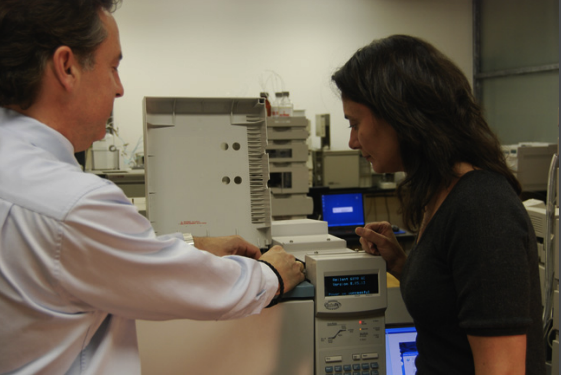
The Dallas County Crime Lab—more formally called the Southwestern Institute of Forensic Sciences, or SWIFS—has yet to come under the commission’s microscope. But Dr. Chris Nulf says a thorough review is long overdue. He worked at the lab as a forensic analyst in 2008 and 2009 and has been trying to get the commission to investigate Dallas’ crime lab ever since. He is speaking openly for the first time about the problems he saw there during his tenure. Nulf says the lab practices poor quality control, training is sloppy, and management retaliates against employees who raise concerns. If Nulf is right and there are serious problems with the crime lab, every case that relies on physical evidence could be called into question. Imagine if every convicted rapist going back five years suddenly had a good reason to appeal his case. Similarly, sloppy lab work could send innocent people to jail.

“People’s liberties are at stake here,” Nulf says.


The Dallas County Crime Lab is currently accredited by the Texas Department of Public Safety and, as of 2003, by ASCLD/LAB, the multinational accreditation agency that crime labs pay to join. But Nulf says accreditation is only one part of the puzzle and that ASCLD/LAB has taken the lab at its word that its policies are sound. Essentially, the crime lab is doing fine because it says it is.

Nulf earned a Ph.D. in molecular microbiology from UT Southwestern Medical Center in 2004 and was hired on at the crime lab in March 2008. In the 14 months Nulf spent in training as a forensic analyst, he says that using expired chemicals was a matter of practice, that he saw a box fan used to cool a room where microscopic evidence was handled, and that he was trained under managers and supervisors who had different, and loose, interpretations of lab protocol.

“You never knew what to believe when someone told you something,” Nulf says of his training.


In the summer of 2008, Nulf informed his supervisor, Dr. Stacy McDonald, that a stock chemical, sodium perborate tetrahydrate, used in the serology lab—where blood and other bodily fluids are analyzed—had expired in 2005. The crime lab’s procedural manual states that that chemical can be used for a maximum of 90 days after its expiration date. When Nulf’s complaints were forwarded to ASCLD/LAB, the Dallas crime lab had an explanation. Management explained that sodium perborate is merely a component used to make complete “working solutions.” As long as the working solutions made from the expired chemical passed quality control, that was good enough. In other words, the lab admitted that, yes, it was using spoiled meat, but the chili still tasted fine.

Nulf claims that analysts were trained to re-prepare working solutions until they got a quality control that worked. If an expired chemical failed quality control most of the time but analysts could get it to work some of the time, no one would be the wiser. This kind of information wasn’t shared with ASCLD/LAB.


“They trained on preference, rather than protocol,” Nulf says. (Dallas County medical examiner Dr. Jeffrey Barnard, who oversees the crime lab, was unavailable for comment as of press time.)

Nulf anonymously filed grievances with the Texas Forensic Science Commission in the spring of 2009, while still employed at the lab. “I knew they weren’t following protocol,” he says. “I knew they weren’t being scientific.”
 

Beyond the expired chemicals and the box fan—in their report to ASCLD/LAB, the crime lab said that the fan was used only temporarily and that it faced away from areas where evidence was handled—Nulf also says that, in the year he worked for the crime lab, he was never asked to submit his own DNA for an employee database used to investigate potential contaminations. An employee DNA database is standard procedure for all crime labs.

Nulf was fired in May 2009, in part because he insisted on making a notation in the lab’s logbook that he had used an expired chemical. He was told that the notation was made “without direction from a supervisor and without sufficient documentation.” He publicly attached his name to his previous complaints in a wrongful termination suit filed against Dallas County in October of that year. Local media jumped on the suit, as it contained powerful statements that accused the crime lab of a “total lack of professionalism” and that “the same evidence used to convict murderers and rapists may be used to put them back on the street.” Nulf’s suit couldn’t go to trial because of a procedural technicality. He had failed to file his complaint with the county within seven days of his termination, as per policy. He and his lawyers filed a nonsuit, ending the litigation.

With no recourse in court, Nulf has waited two years to hear the state commission’s response to his complaints. He has amassed a pile of documents via open-records requests to shore up his case. One of those documents is a “corrective action report,” an internal memo created when problems are found in the lab. A report labeled CAR-07-007 details that “areas of the Trace Evidence Lab and office were contaminated with blood,” on or about July 16, 2007, per Dr. Timothy Sliter, the lab’s evidence section chief. The report itself, though, contains the signature of a crime lab employee, Karen Young, who didn’t work for the lab in 2007. Nulf also noticed that the template used for the report looked different than others used in that year. The report lists a resolution date of November 25, 2008. It was not, then, created contemporaneously with the contamination discovery, but 16 months later.

Nulf believes Sliter withheld information about a widespread contamination for 16 months. He says that’s the kind of information defense attorneys would have found very useful. With the prosecution, say, pointing to blood from the crime scene found on the accused’s shirt, the defense could raise the question of whether the blood might have been transferred to his client’s shirt as it was being analyzed in a contaminated lab.

When D Magazine contacted the Texas Forensic Science Commission to inquire about the status of Nulf’s complaint—the commission’s website still says a decision has been “abated” pending Nulf’s civil litigation, which was terminated in July 2010—a commission rep said Nulf’s complaint had been dismissed back in August 2010.

The dismissal didn’t come as a surprise to Nulf, because he’s never been notified by the commission about his case’s status. Representatives for the commission claim they did notify Nulf and that the case was dismissed on the grounds that he did not tie his complaints to a particular criminal case, as is required by the commission’s protocol. That protocol, however, wasn’t adopted until January 2010—months after Nulf had filed his original complaint.


New DWI Statutory Warning (DIC-24) - 2011

After being arrested for DWI, a police officer will read the citizen accused their "Statutory Warnings" before asking them to submit to a breath test.

This form, the DIC-24, goes through the warnings to a person discussing potential license suspension for refusal, failure, and hearing requests.  It was originally created as a "dummy proof" form so that officers weren't illegally coercing people into giving breath or blood samples.

The DIC-24 is often criticized by DWI attorneys as overly complicated, and in some cases, flat out deceiving.

I always thought it was deceiving that they tell you what happens if you provide a sample over .08, but doesn't mention that if your sample is under .08 you get charged anyway.  It is also curious that the form has a line to sign if you refuse, but not if you want to submit.

The new DIC-24 adds language regarding search warrants for blood.  The new text reads:

If you refuse to submit to the taking of a specimen, the officer may apply for a warrant authorizing a specimen to be taken from you.

I like the addition of the language, because it explains some truth's of what may happen.  However, I still think that someone giving a sample with the old, or the new form could easily be "coerced" to give a breath test in fear of the vampire police officer.

It is unclear so far, how this form will affect future DWIs.  We will be watching closely to see if officers reading the old forms could cause a breath or blood test to be inadmissible as a result of the incorrect warnings.

District Attorney Requests New Prosecutor in Case Against Judge Wooten

In an interesting filing, Greg Willis, the current elected Collin County District Attorney filed a "Motion for the Appointment of a New, Impartial and Disinterested Attorney Pro Tem" in the case against Judge Wooten.

In the filing, Willis explains that it was the previously elected District Attorney who had the conflict and no him.  He states:

Regardless of the existence of actual conflicts of interest, this prosecution is cloaked in the appearance of impropriety and should not continue on its present course.

Willis goes through the law favoring the right to terminate an attorney pro tem that was appointed at the request of his predecessor (John Roach).  He requests the termination "to avoid the appearance of impropriety and to preserve the public's confidence in the fairness of this prosecution."

He goes on to explain that recently filed documents by the attorney pro tem's (Assistant Attorney Generals Harry White and Brian Chandler) accused Judge Wooten of initiating an FBI investigation against former DA John Roach, and the attorney pro tems themselves.  

Based on this accusation, this would mean that White and Chandler are not disinterested and have a stake in trying to convict Judge Wooten.  Basically, if they convict Judge Wooten, it would justify their investigation, and clear their own names in their federal investigation.  This would be in conflict of the prosecutor's duty to see that justice was done.

John Pitchford, of the Collin County Observer, wrote a recent article, No Speedy Trial for Judge Suzanne Wooten, which talks about the latest on this case, along with detailed coverage of the back story.

I do find it amusing that this motion is "State of Texas  v. Hon. Suzanne H. Wooten" in the header.  I've never seen a prosecutor refer to a defendant as "Honorable."

Yes, although that is the proper way to address a judge it seems out of place.  But then again, I've never read documents on a Judge indicted under suspicious circumstances.

Tags:

K. Jefferson Bray (1969-2011)

I was very sad to hear about the passing of Jeff Bray (Kenneth Jefferson Bray).  I knew Jeff from our days at the Collin County District Attorney's office. 

Jeff and I were hired in 2003 on the same day along with one other prosecutor.  But it was not until I moved up to prosecuting felonies that I got to know him.  Jeff had already worked at other District Attorney's Office and was starting as more of a lateral hire to begin work prosecuting felonies and white collar crimes.

I got to know Jeff when we were assigned to the same Trial Team.  We were assigned to the 296th, 416th, and 199th District Courts.  We weren't in the Taj Mahal Court Building that now exists, but rather the courthouse at 210 S. McDonald. 

With the tiny quarters available to the DA's office there, we shared an extremely small office.  Yet somehow or office attracted a lot of visitors.  Possibly because of the 1920's radios that stacked his desk blasting great AM radio, but more likely because of Jeff having a working Cappuccino machine in the office along with our great location. We were in a back corner far away from the prying eyes of others. 

Around that time, while I was planning a wedding, Jeff was the one that made the suggestion that I ultimately used for our honeymoon.  We went to Costa Rica at his suggestion, with a great hotel called Finca Rosa Blanca on his advice.  My only requirement on the trip was to bring back tons of coffee for him.

Jeff had an amazing sense of humor, that took me a few days to understand. But once I did, I immediately realized he was one of the funniest people I ever met.  He was also one of the few people that understood my often obscure and random Seinfeld references.

Jeff will be missed by many. I've listed his official obituary below along with services information.  It also lists places where donations can be made.  However, I think Jeff would appreciate a donation to the "Human Fund," from me.

--------

Kenneth Jefferson "Jeff" Bray was born on July 2, 1969 in Conroe, Texas and died August 20, 2011 after a courageous battle with cancer and other complications.
Jeff is survived by his wife, Jennifer, and daughter, Charlotte Belle, of Parker; brother, Ben, of Boston, Massachusetts; parents, Dr. Don and Elizabeth Bray, of College Station; father and mother-in-law, Ira and Gretchen McComic, of Plano; brother-in-law, Matt McComic, and fiancé, Allison Kiernan, of Dallas; brother-in-law, Andy McComic, and wife, Sally, of McKinney; nephews, Cole and Brayden McComic; his loving aunt, uncle, cousins, loyal dog; Atticus, and a multitude of friends.


After graduation for A&M Consolidated High School, Jeff attended Texas A&M University, where he was a Life Loyal Sigma Chi and member of Mensa. He pursued his love of the law and graduated from the Oklahoma City University School of Law. Jeff was an assistant district attorney with the Gregg County, Dallas County, and Collin County District Attorney's Offices. He was certified in criminal law by the State Board of Legal Specialization and was considered an expert in evidence. He shared his expertise by teaching fellow prosecutors a numerous Sate Bar criminal conventions. Jeff then became the legal advisor to the Plano Police Department.

On September 20, 1997, Jeff married Jennifer after a six-week whirlwind courtship. Jeff enjoyed gardening, history, all things Aggie, politics, prosecution (which he considered the Lord's work), antiques animals, and most of all, his Daddy's girl, Charlotte. Jeff was an advocate for all animals, a defender of justice, cultivator of fresh tomatoes and orchids, and enjoyed traveling to jungles and rainforests.

Services will be held Tuesday, August 23, 2011 at 2:00 pm at First United Methodist Church in Plano, Texas. Visitation with the family will be held on Monday, August 22, 2011 from 6 pm – 8 pm at Ted Dickey West Funeral Home at 8011 Frankford Rd. Dallas, TX 75252


The family is especially grateful to Chief Greg Rushin, the members of the Plano Police Department, and the staff at Southwestern Medical Center for kind and thoughtful support of Jeff throughout his illness.


In lieu of flowers, Jeff would be honored if donations were made to any of the organizations for which he had a special fondness: the 12th Man Foundation, the Boy Scouts, the SPCA, the Republican National Committee, UT Southwestern Cancer Center, or a charity of your choice.