How to Fight a DWI Blood Test Case - Intro

With all of the recent publicity surrounding DWI Blood test cases, a few months back, I decided to write a paper on how to fight DWI blood test cases.

Well, the paper was coming along very slowly, and I quickly realized my topic was too broad.  I decided to narrow it down to remove all "constitutional/"are the warrants illegal" areas, and leave that area to another legal scholar.  In general, I think the Transportation Code is so clear, I didn't want to get on my soapbox about it any more.  Plus, I have read (but don't buy into) the Beemon case which is where most prosecutors point to.

If anyone is interested in working on a paper with me, let me know.  Maybe a law student out there??

My future topics will include:

  • Retrograde Extrapolation
  • Attacking the Probable Cause in the Warrant Itself
  • Breath Test Coercion
  • Chain of Custody Issues
    • Keeping the Blood Out
    • Creating Doubt
  • Fighting the blood drawer as a "Qualified Technician: (Fight going on today.. read about it here!)
  • Whole Blood vs. Serum Blood
  • Retesting Independently
  • 38.22/38.23
  • Presentation of the Warrant (already covered quite well by Sarah Roland in this article)
  • Poor Lab / Testing Procedures
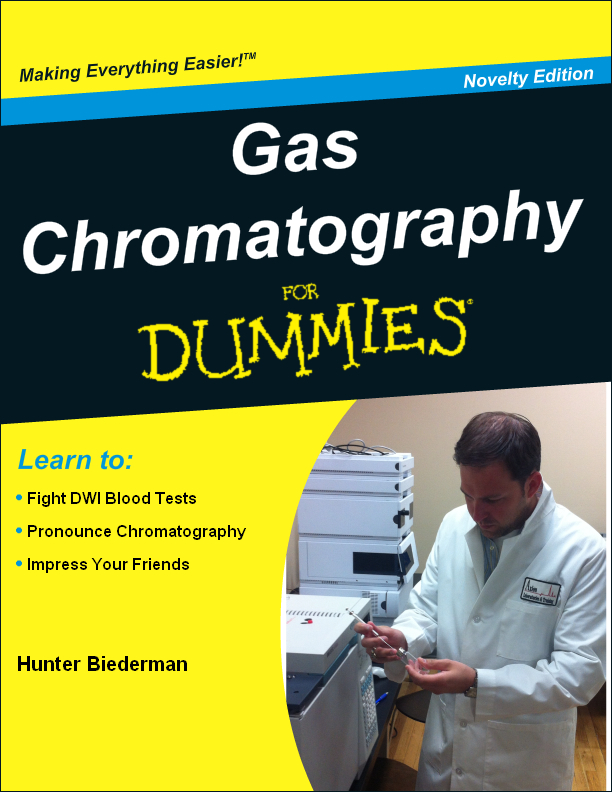
    • Gas Chromatography / Enzymatic Method

I hope you enjoy (and help contribute) to the upcoming series "How to Fight a DWI Blood Test Case"

DWI Blood Draw Debate Continues

Well, it seems as if the blood draw debate is continuing.. this time in Austin.

Austin DWI Attorney
Jamie Spencer has been reporting on the Vampire Blood Draws heading to Austin Here, and Here

The newest twist is evident from the headline in this article on KXAN in Austin -- "APD chief wants officers to draw blood on DWIs"  Apparently it is not good enough to take someone to the hospital against their will, strap them down, and pull their blood.  APD wants the officer to do it.

As Jamie points out, people on KXAN's website are commenting in droves -- mainly against the idea.  He shows that "[t][he overwhelming majority said it was a bad idea. 46 commenters – out of 51 total – were against it."

Obviously this isnt a survey, or a double blind study, but certainly shows that there is opposition to the idea.  Austin DWI Attorney Ken Gibson even was asked about the problem and explained that "[f]olks that are exercising their right shouldn't be afraid, that by doing so, 'Bubba Police Officer' may stick them in the arm."

A new group now dove into the mix as well.  The Texas Civil Rights Project says in this article that:

"You have the police officers themselves doing the blood tests exposing the city to all types of lawsuits. They don't have nursing training; they don't have medical training," said Jim Harrington, director of the Texas Civil Rights Project.

In this article, Mr. Harrington explains:

“You’re basically violating somebody’s constitutional rights by going into their body and taking blood,” said Jim Harrington, Director of the Texas Civil Rights Project. “People who haven’t been to nursing school (or) medical school could cause a lot of problems to the person they’re sticking the needle in to.”

Of course, these blood draws can only be held with the signing of a warrant by a judge.  Dallas Criminal Defense Attorney Robert Guest shows what happens when one judge actually stops to read the law.  His article, Austin DPS vs. Hero Judge -- Update shows the few prosecutors spearheading the MADDness, are up in arms!

Of course, I still cant get past this.  In my past simple post "Refusing a Breath Test" I showed the LAW:

Texas Transportation Code

§ 724.013. PROHIBITION ON TAKING SPECIMEN IF PERSON REFUSES; EXCEPTION.
Except as provided by Section 724.012(b), a
specimen may not be taken if a person refuses to submit to the
taking of a specimen designated by a peace officer.

What part of this does the State not understand?

Refusing a Breath Test

Texas Transportation Code

§ 724.013. PROHIBITION ON TAKING SPECIMEN IF PERSON REFUSES; EXCEPTION.
Except as provided by Section 724.012(b), a
specimen may not be taken if a person refuses to submit to the
taking of a specimen designated by a peace officer.

What part of this does the State not understand?

DWI Mandatory Blood Draws

Here is an interesting article on mandatory blood draws for DWI cases. This has been the latest trend in trying to convict those suspected of DWI.  I haven't really written much about it, but I am planning on it in the future. 

There seems to be some serious constitutional, administrative, and public policy problems with the mandatory taking of blood tests.

Here is the article:

Weekend DWI roundup has 'dramatic' results

by Audrie Palmer
Midland Reporter-Telegram
Published: Saturday, April 12, 2008 7:51 AM CDT
Results from Midland's March 28-29 "No Refusal Weekend" were released Friday, and the amount of alcohol in the system of some of the drivers cited for driving while intoxicated was shocking to officials.

"We had, what I consider, pretty dramatic results," Midland County District Attorney Teresa Clingman said Friday morning at a press conference.

In all, the average blood alcohol content in those who voluntarily subjected themselves to a Breathalyzer test was 0.136. The average BACs of those who refused the Breathalyzer test and were then made to submit a blood sample because of a search warrant were 0.22.

In Texas, one is considered legally intoxicated when his or her BAC is 0.08.

The weekend project was a combined effort of the Midland County District Attorney's office, Midland County Sheriff's Office, Midland Police Department and the Texas Department of Public Safety.

About 10 additional DPS troopers were brought in to help from nearby counties and both the Sheriff's Office and MPD provided extra officers to help patrol the areas.

"It's fair to say that the effort was to keep Midland safer," said MPD traffic Lt. Brian Bogart.

In all, the weekend netted 26 arrests with eight of those being for felony offenses.

For the month of February, authorities arrested a total of 36 individuals over the course of four weekends with eight of those citations for felony offenses.

By law, anyone stopped for a DWI can refuse to take a breath test, and by doing so, it hurts in building a case against the driver based only on an officer's testimony and videotape, said Clingman.

"You can't smell what the officer is smelling. You can't hear that well. You can't see what the police officer sees," she said in regards to using a videotape as evidence when on trial.

But Midland defense attorney Steve Hershberger is convinced that taking a breath test isn't always effective.

"I have had cases where the Breathalyzer machine didn't work," he said.

During the "No Refusal Weekend," those who resisted taking a Breathalyzer test were apprehended while a search warrant was made for a sample of their blood.

And getting a search warrant for one's blood is not unusual or uncommon.

Hershberger said that it is not unconstitutional for officials to collect a fluid sample -- whether it be from a person's blood, saliva or urine -- as long as it doesn't impose on their Fourth Amendment right which prohibits unreasonable searches and seizures.

Authorities are allowed to file for one if they have any reasonable doubt about a driver's intoxication levels. Bogart said that officers can get a search warrant any time, but that it could take up to 3-4 hours to complete.

But with the DWI weekend project, county judges were on call making the efforts easier for officials and a nurse from the health department administered the tests. It reduced the time for the officers by several hours, said officials.

Only about one of every four drivers that weekend submitted to a breath test, according to Bogart.

"We need to make them more aware they don't really need to drive while intoxicated," Clingman said. "People just need to be aware we will do it again in the future."

But Hershberger, believes that the consequences on an individual charged for DWI are sometimes "too far ranging."

Those with a DWI arrest on their record, he said, have been affected with having an increase in their insurance as well as some of his clients have had a hard time finding future employment.

"It really does wreck people's livelihood," Hershberger said.

Faye Hodges, president of the Stop DWI organization in Midland, volunteered her time during the "No Refusal" project and brought refreshments and snacks out to officers.

Hodges, who lost her 24-year-old son when he was killed in a head-on collision by a drunken driver, was in favor of the collaborative effort of the local agencies for this project.

"I commend everyone who worked. It's hard to get a prosecution when someone refuses a breath test," she said.

Hodges said Friday she has sat in on DWI trials before and has watched defendants "get off" because of a lack of evidence declaring them to be intoxicated during the incident.

"There's no doubt when you take someone's blood to see if they are drunk or not," she said.

Audrie Palmer can be reached at palmer@mrt.com.

Fact box:

Youngest driver arrested 17

Oldest driver arrested 56

Average age of drivers 33

Highest BAC with breath test 0.205

Lowest BAC with breath test 0.085

Average BAC with breath test 0.136

Highest BAC with a blood sample 0.32

Lowest BAC with a blood sample 0.13

Average BAC with a blood sample 0.22

Continue Reading...